
3 Understanding development finance
The food and agriculture and finance sectors are two different worlds where the practical realities, concepts and language of each is not necessarily well understood by actors in the other. This itself creates difficulties for financing food and agriculture.
This section provides a brief overview of the development finance world and introduces key concepts, main funders and financial instruments.47
3.1 The basics of financing
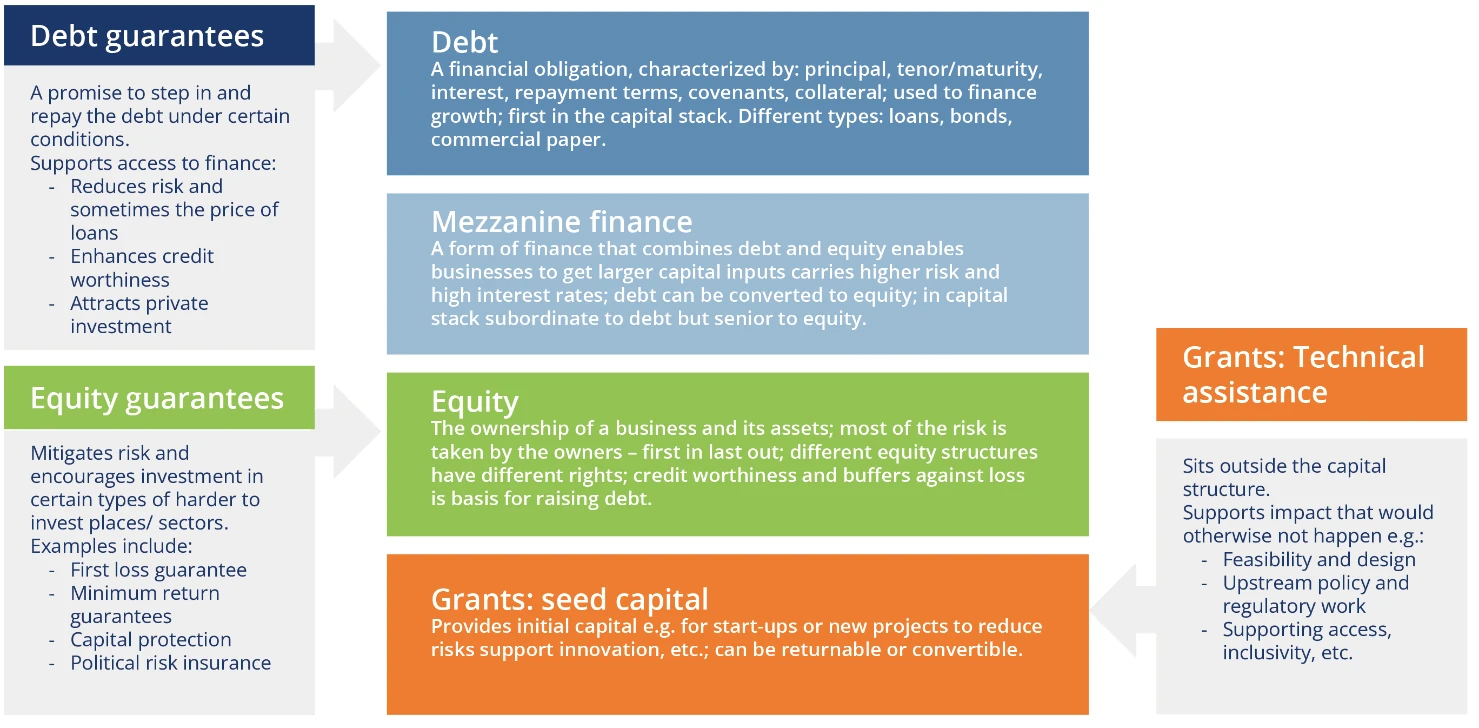
Every business requires capital as financial resources essential for operations and growth. This capital includes cash, assets, investments and retained profit. Business capital can come from revenue, loans or equity investments in the business. Capital structure is the combination of debt (concessional and commercial) and equity (via private or public investment) as well as mezzanine finance (a combination of debt and equity) that a business uses to operate and grow.
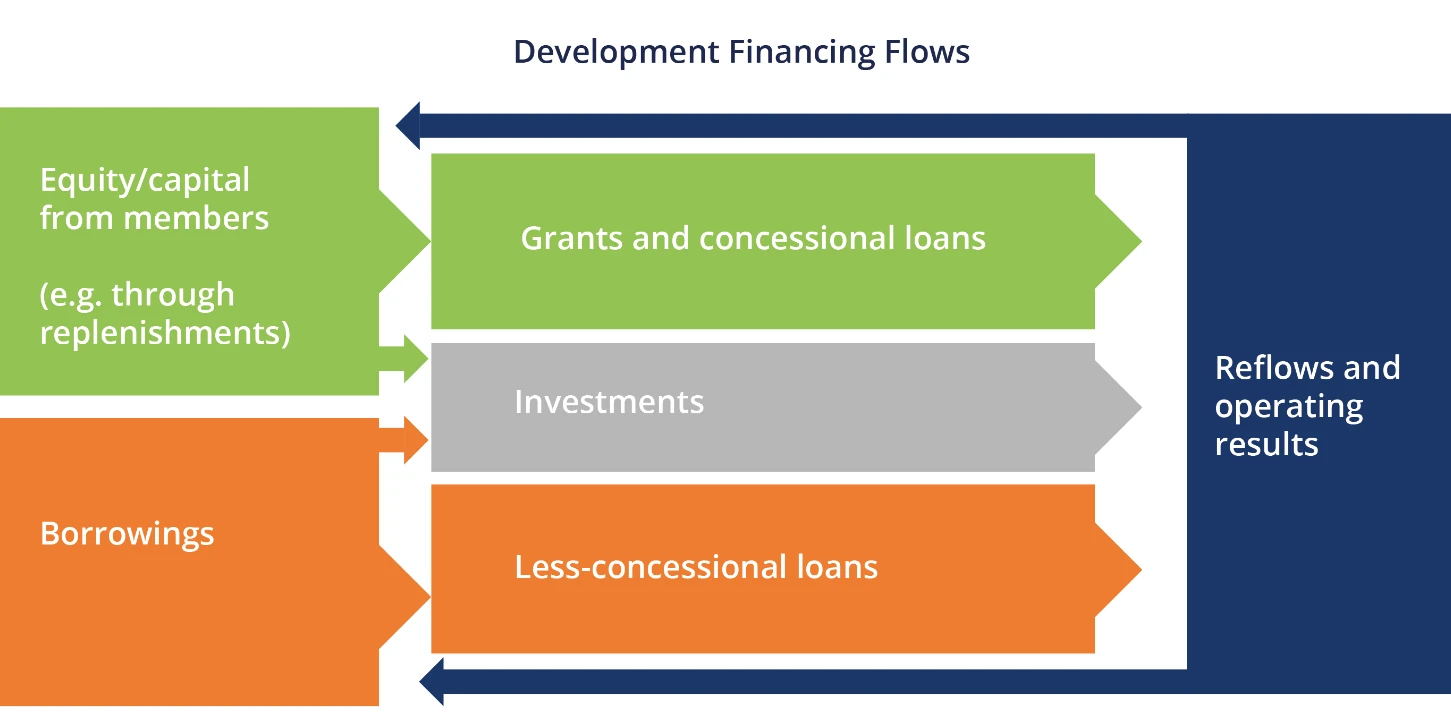
In development finance, donors, development banks, foundations and impact investors help to lower the cost and/or risk of financing business development, as well as help to make finance more accessible. Figure 2 illustrates how donor (member) capital is combined with borrowings to finance development that reflows from this financing. The intended catalytic effect of development finance is illustrated in the following ways:
(1) Providing grants for certain aspects of business development, which reduces the amount that needs to be borrowed and helps create a more enabling and profitable operating environment.
(2) Providing technical assistance, so that businesses can have viable business plans and necessary knowledge and skills, making them more attractive and viable for investors.
(3) Providing concessional finance with loans at below market rates to reduce borrowing costs.
(4) Taking equity in an enterprise and accepting a higher risk and/or low returns.
(5) Providing equity guarantees for other investors who may take equity in an enterprise (i.e. covering the loss if a business fails or if it does not provide the expected return on the equity).
(6) Providing debt guarantees for other investors who make a loan to enterprise (i.e. covering investor losses if the business goes broke or if it does not provide expected return on the equity).
(7) Establishing insurance mechanisms to help protect a business and hence the equity and debt held by others from extreme events, such as floods or droughts.
(8) Providing commercial finance with loans at market rates, with interest supporting further investments.
There are three fundamental issues in financing the food and agriculture sector. The first is the cost of serving the large number of small enterprises. It is dramatically more expensive to administer many small loans or equity investments than single large ones, and this raises the cost of capital. Second are the high levels of risk, particularly in agriculture, related to weather variability and market fluctuations. Third, is the poor enabling environment for agrifood businesses, including poor infrastructure, lack of market transparency, corruption and ineffective or unenforced regulations.
All these factors mean that effective financing of the agrifood sector generally requires an integrated package of interventions involving government, the finance sector, field-level development organizations and larger scale agrifood enterprises. Part of such an integrated and coordinated approach is blended finance, which will be discussed below in section 4. It also means that intermediaries are often needed between the commercial financing or banking sector and individual enterprises. These include micro-financing institutions, cooperatives, value chain development initiatives and supporting NGO or community organizations, who can offer business services.
Development finance is based on the idea that by making finance more accessible and less risky, there will be wider public benefits related to poverty reduction, economic development, enhanced food security and nutrition and environmental sustainability. This justifies public sector contributions to development finance, which can be seen as a response to market failures related to social and environmental outcomes.
The principle of additionality in development finance refers to the idea that financing from development institutions (i.e. MDBs, DFIs and other aid agencies) should lead to change beyond what would otherwise happen without their involvement. This principle ensures that development finance does not merely substitute for private sector funding but instead provides additional impact, resources or outcomes that would not be achievable through private capital alone.
HOW DEVELOPMENT FINANCE INSTITUTIONS VIEW THEIR ADDITIONALITY
DFIs view themselves as anchor investors: providing cofinancing along with private investors and supporters of blended funds and public funds in market creation.
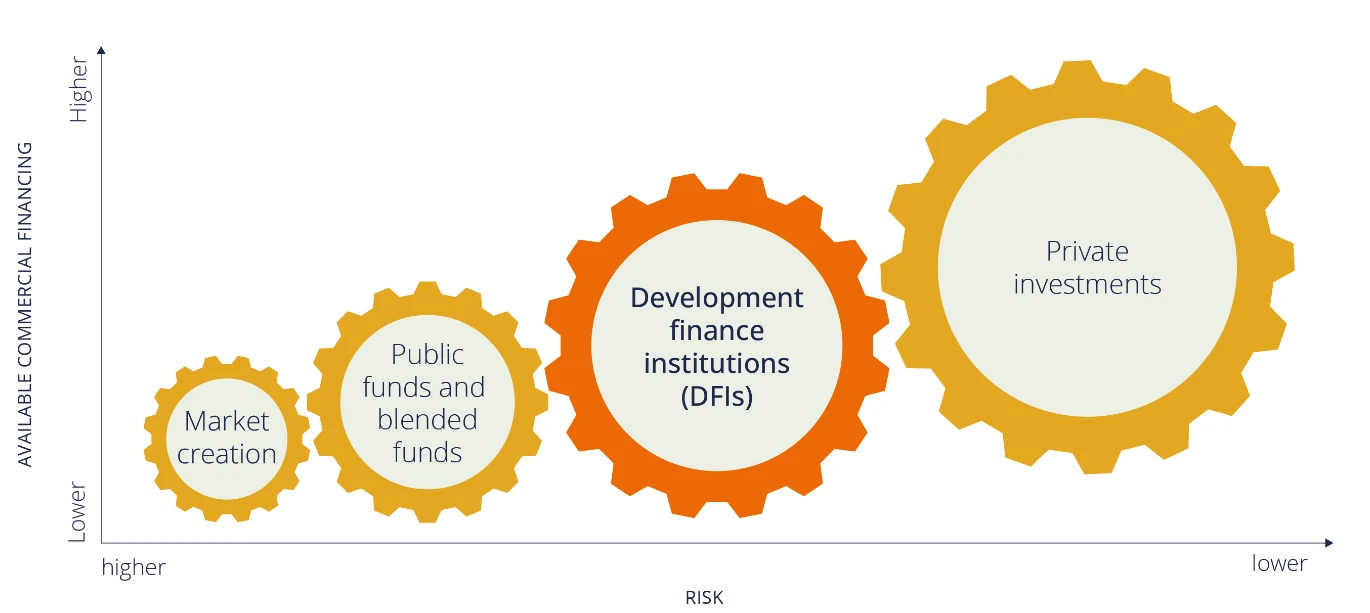
Source: Adapted from FMO Entrepreneurial Development Bank (2022), as reproduced in GDPRD and the Shamba Centre (2024).
3.2 Development finance institutions
Development finance institutions are not-for-profit entities with a mission-driven purpose of fostering social and economic progress in LICs and MICs. They are established and backed by one or more sovereign state. Multilateral development banks, also called international financial institutions, are formed by multiple sovereign states and operate under international law. National development finance institutions are created by a single sovereign state and operate under the law of that country. Some DFIs are banks and borrow from capital markets to lend and make a margin to cover costs. Others have regular replenishments from their sovereign members enabling them to deliver grants and offer loans at concessional rates. The terms IFIs and DFIs are often used interchangeably, and not very precisely. “Vertical” funds are a development funding mechanism that is multilateral (in terms of funders) and focused on a specific issue or sector rather than distributing funds across a range of development issues. Examples of all types of IFIs are included in Table 1.
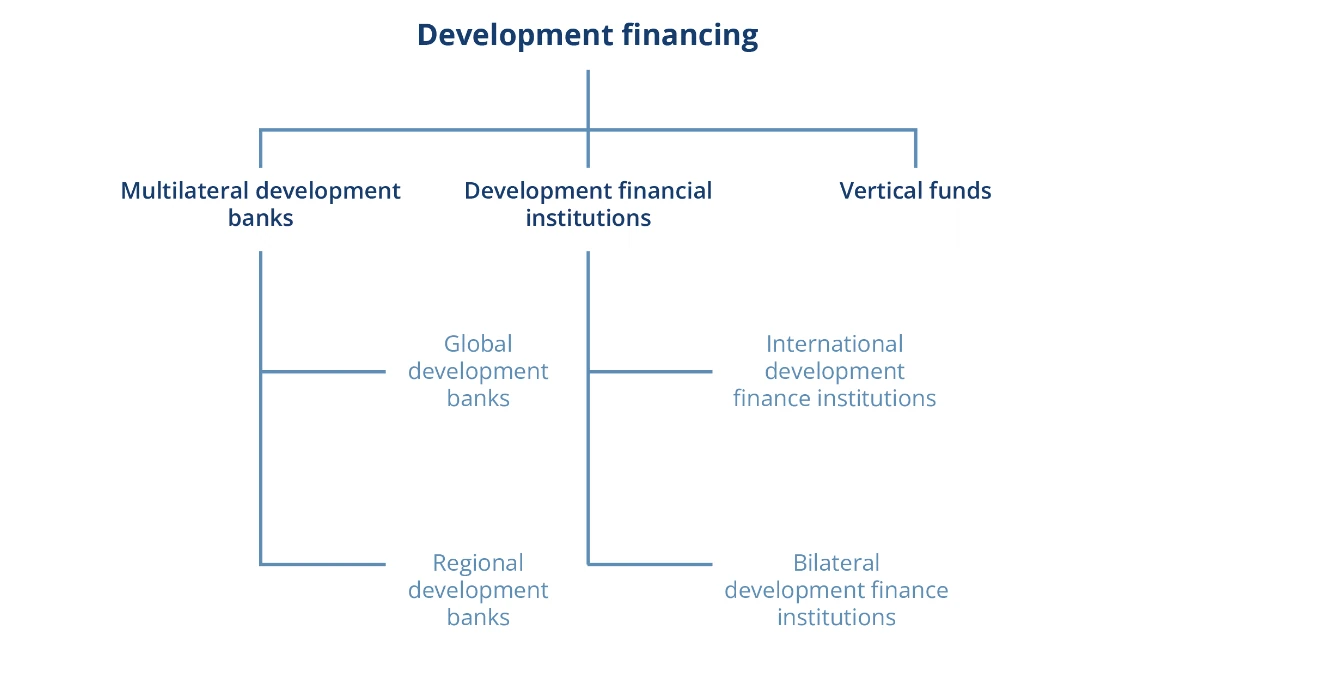
Table 1: Main development finance institutions
| Multilateral development banks | International development finance institutions | Bilateral development finance institutions | Vertical funds |
|---|---|---|---|
| International Bank for Reconstruction and Development (World Bank Group) | International Development Association (World Bank Group) (IDA) | KfW (Germany) | Global Environment Facility (GEF) |
| International Finance Corporation (IFC) (World Bank Group) | African Development Fund (AfDF) | Brazilian Development Bank (BNDES) | Global Agriculture and Food Security Program (GAFSP) |
| Asian Development Bank (ADB) | Asian Development Fund (AsDF) | Development Bank of South Africa (DBSA) | Green Climate Fund (GCF) |
| African Development Bank (AfDB) | International Fund for Agricultural Development (IFAD) | Small Industries Development Bank of India (SIDBI) | Adaptation Fund |
| Inter-American Development Bank (IDB) | OPEC Fund for International Development | Industrial Development Bank of India (IDBI) | Climate Investment Funds (CIF) |
| European Bank for Reconstruction and Development (EBRD) | FMO | Global Fund to Fight AIDS, Tuberculosis, and Malaria |
3.3 Development finance instruments and mechanisms
There are multiple financing instruments that donors and development finance institutions can use to raise capital, support development initiatives, and catalyse greater private sector investment. Often these are used in combinations as explained in Section 5. Table 2 describes the main instruments used in development finance.
Notes
-
This section draws on the GDPRD Webinar Decoding the Fundamentals of Development Finance, including the presentations of Natalia Toschi (Head of Funding, IFAD) and Mita Samani (Senior Consultant, Development and Climate Finance). ↩